Try Sunglasses Online: How to Find Your Perfect Fit Without Visiting a Store
You can try sunglasses online by comparing frame measurements to your face, using a clear photo to check proportions against your features, and relying on a face-shape guide to narrow down styles like aviators, wayfarers, or round frames before you buy. Combined with detailed sizing charts, lens options, and a flexible return policy, this method lets you shop sunglasses online with the same confidence as trying them on in a store — without leaving your home.
Most people who search for ways to try sunglasses online expect a camera-based virtual mirror. That’s one option, but it’s not the only reliable one, and it’s not even the most accurate for a lot of face shapes. What actually works — and what serious eyewear shoppers in Pakistan and elsewhere rely on — is a combination of simple, low-tech methods that take the guesswork out of buying frames sight unseen. This guide walks through all of them, plus the details competitors’ pages skip: how lens tint changes with local weather, how pupillary distance affects comfort, and what actually happens when a pair doesn’t fit right after delivery.
Why “Trying On” Sunglasses Online Is Different From Trying Them On In-Store
In a shop, you put a pair on, look in a mirror, and know within seconds if the width feels off or the bridge pinches your nose. Online, you’re working from photos, measurements, and a bit of self-knowledge about your own face. The two methods aren’t identical, but they don’t need to be — they need to get you to the same outcome: a pair that fits, flatters, and doesn’t end up back in a box.
The core difference is that online shopping shifts the “fitting” step earlier, into the browsing stage, instead of after the frame is already on your face. Done properly, this actually catches more sizing mistakes than an in-store glance, because you’re forced to think about frame width, face shape, and lens purpose before you commit, rather than being swayed by how a pair looks under store lighting for thirty seconds.
Method 1: The Face Shape Match
This is the single most reliable way to try sunglasses online, and it’s the one most competitor guides gloss over quickly. Your face shape — round, oval, square, or heart — determines which frame outlines will balance your features rather than exaggerate them.
- Round faces benefit from angular frames — square or rectangular shapes add definition.
- Square faces pair well with rounded or oval frames that soften strong jawlines.
- Oval faces are the most flexible and suit almost any shape, including aviators and wayfarers.
- Heart-shaped faces (wider forehead, narrower chin) look balanced in frames that are wider at the bottom, like cat-eye or light-bottomed aviators.
To check your own shape, pull your hair back, look straight into a well-lit mirror or a recent photo, and trace the outline of your face on the glass or on a printed photo with a dry-erase marker. The general silhouette — not fine details — tells you which category you’re in.
Method 2: The Photo Overlay Technique
If a retailer’s product photos include a front-facing shot with a visible scale (a coin, a card, or a ruler in frame), you can compare the sunglasses’ width against your own face width in a straight-on selfie taken at the same distance. Hold your phone at arm’s length, take a photo with your arms fully extended and your face relaxed, and measure your face width from temple to temple using the same reference object. Match that number against the frame’s stated width — most listings for the geometric double-bridge sunglasses and similar frames on Urban Rivaj’s sunglasses collection list this in the product specs.
Method 3: The Sizing Chart Cross-Check
Every well-run eyewear listing gives three numbers: lens width, bridge width, and temple (arm) length, usually in millimeters. Once you know your face width and preferred fit (snug, standard, or loose), these three numbers tell you more than any camera filter can.
| Fit Element | What It Controls | How to Check It Without the Glasses |
| Lens width | How wide the frame sits on your face | Compare to your own face width at the temples |
| Bridge width | Comfort at the nose, whether frames slide | Note if you currently find glasses/sunglasses pinch or slip |
| Temple length | Whether arms rest evenly behind the ears | Measure an existing well-fitting pair, if you have one |
| Frame material | Weight and flexibility | Acetate and TR90 are lighter than metal; metal holds shape longer |
| Lens tint/type | Glare reduction and UV protection | Polarized for driving/glare; standard tint for everyday wear |
This table alone solves most of the fit complaints that show up in returns — a frame being “too tight,” “too wide,” or “the arms don’t sit right” almost always traces back to one of these five numbers being ignored at checkout.
Method 4: Video Call or Recorded Selfie Comparison
If you’re buying for someone else, or you’re unsure between two styles, record a short 10-second video of yourself in even lighting, then pause it at a frontal frame. Compared to a still photo, video gives a more natural sense of proportion because you’re not holding an artificially stiff pose. This is especially useful for wider or bolder frames like square or oversized shapes, where a static photo can make width look more dramatic than it actually feels in motion.
Common Mistakes People Make Trying to Buy Sunglasses Online
- Judging size from a product photo alone, without checking the millimeter specs. Product photography is often shot on a mannequin head that isn’t proportioned like an average face.
- Ignoring bridge width, then wondering why the frame slides down. This is the most common complaint after delivery and the easiest one to avoid.
- Choosing a lens tint based on looks instead of use — dark tints look great in photos but aren’t ideal for overcast or hazy days, which are common in Pakistani cities during winter smog season.
- Skipping the return policy before ordering. A retailer’s return window matters more than any try-on method, because it’s the actual safety net if the fit is off. Urban Rivaj’s returns policy covers exactly this scenario.
Lens Tints and Pakistan’s Climate: A Detail Competitors Skip
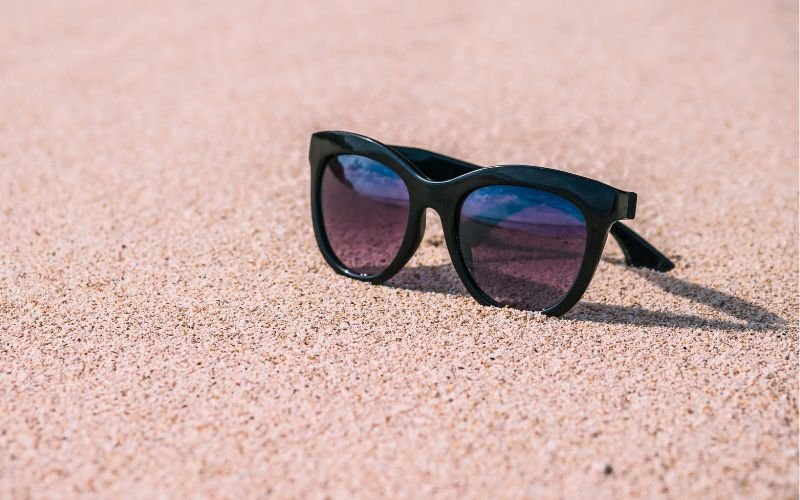
Most virtual try-on guides focus entirely on frame shape and ignore lens tint suitability, which matters as much as fit in a country with Pakistan’s range of weather. Grey and green lenses preserve true color perception and work well for daily driving and outdoor wear in strong sun, which covers most of the year in cities like Lahore, Karachi, and Islamabad. Brown and amber tints boost contrast and are better suited to hazy or overcast conditions, including the smog-heavy months in Punjab. Mirrored lenses cut glare most aggressively and suit high-altitude or beach trips, but they’re a style-forward choice rather than a daily-wear default. According to the American Academy of Ophthalmology, sunglasses should block 99–100% of UVA and UVB rays regardless of tint or lens color, so tint choice should come down to comfort and contrast preference, not protection level.
Understanding Pupillary Distance (PD) Without a Retailer’s Tool
Pupillary distance — the space between the centers of your pupils — affects how centered the lenses sit relative to your eyes. Most sunglasses don’t need PD precision the way prescription glasses do, but for polarized or larger lenses, a mismatch can cause slight visual distortion at the edges. You can estimate your PD by holding a ruler against your brow line in a mirror, closing one eye, and lining up the zero mark with your pupil’s reflection in the mirror, then reading where your other pupil falls. Average adult PD ranges from 54–74mm, and most unisex frames are designed around the 58–64mm midpoint, which is why one style photographs differently on different people even when the frame width is identical.
Budget vs Premium: What You’re Actually Paying For
A frame priced at a few thousand rupees and one priced at ten times that can look nearly identical in a photo. The real differences sit in hinge durability, lens coating quality, and UV filter consistency across the lens surface — not always visible in marketing photos. Reputable affordable retailers, including Urban Rivaj‘s sunglasses collection, disclose lens material and UV rating on the product page, which is the detail worth checking regardless of price point. If that information isn’t listed anywhere, that absence is itself worth noting before you buy.
Real-World Example: Matching a Frame to a Face Shape
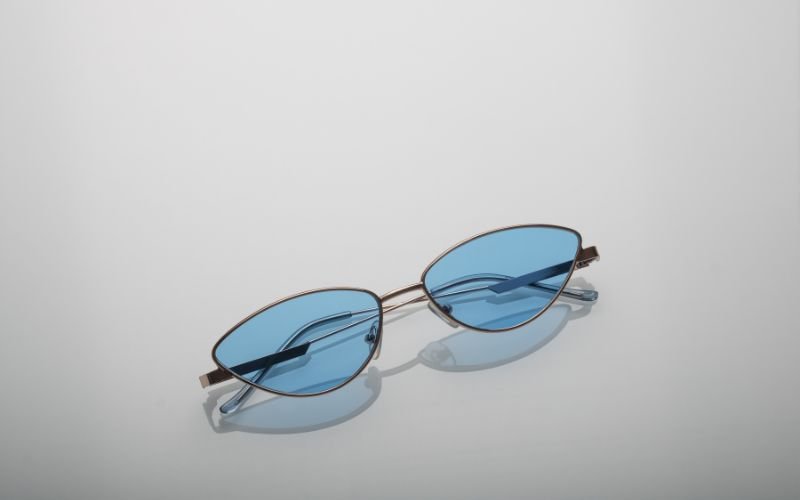
Take a classic geometric double-bridge frame, like this style — an angular, slightly oversized shape with a metal double bridge. On an oval face, this style reads as fashion-forward without overwhelming the features. On a heart-shaped face with a narrower chin, the same frame’s strong upper line balances a wider forehead nicely. On a round face, it adds the angularity that a rounder frame would lack. This is the exact reasoning to apply to any frame before checkout: does the frame’s dominant line contrast with or repeat your face’s dominant line? Contrast usually flatters more than repetition.
Use Cases: Who Should Use Which Method
- First-time online sunglasses buyers should start with the face shape match — it eliminates the widest range of poor choices fastest.
- Buyers replacing a pair they already own and liked should use the sizing chart cross-check, measuring their old pair directly.
- Buyers purchasing as a gift should use the video comparison method with a recent photo or video of the recipient, paired with a flexible return policy as backup.
- Buyers in glare-heavy environments — drivers, outdoor workers, frequent bikers — should prioritize polarized lens listings over tint color alone.
Frequently Asked Questions
Can I actually try sunglasses on virtually before buying online?
Yes, though the method varies by retailer. Some larger international sites offer camera-based virtual try-on tools, while smaller and mid-sized retailers rely on detailed sizing charts, high-resolution photos, and face-shape guides. Both approaches work if you cross-check frame measurements against your own face width rather than relying on visuals alone.
What’s the most accurate way to try sunglasses online without a virtual mirror?
Comparing your face width and existing glasses’ measurements against a listing’s stated lens width, bridge width, and temple length is generally more accurate than a camera filter, since filters can distort proportions depending on phone camera angle and lighting.
How do I know my face shape without going to an optician?
Pull your hair back, look straight into a mirror or recent photo, and note whether your jawline is angular (square), rounded (round), balanced (oval), or narrower at the chin than the forehead (heart-shaped). This takes under a minute and is accurate enough for frame selection.
Do polarized sunglasses cost more, and are they worth it online?
Polarized lenses typically cost somewhat more than standard tinted lenses because of the added anti-glare film, but they’re worth it for driving, biking, or being near water or bright pavement, where glare reduction meaningfully improves visibility.
What if the sunglasses I order online don’t fit right?
Check the retailer’s return policy before ordering. Urban Rivaj offers a 7-day hassle-free return window specifically to cover fit issues that only become clear after the frame arrives — check the returns and contact page for details.