Best Sunglasses to Avoid Sun Damage – Complete UV400 Guide
Choosing the best sunglasses to avoid sun damage comes down to one number and one word: UV400, and coverage. Sunglasses that block 100% of UVA and UVB rays up to 400 nanometers, paired with a frame large enough to stop light sneaking in from the sides, are what actually protect your eyes — not the darkness of the lens. Polycarbonate lenses, wraparound or oversized frames, and a genuine UV rating matter far more than tint, brand, or price. Everything else — polarization, mirror coatings, color — is a comfort upgrade, not a protection feature.
That’s the short version. Here’s what it actually takes to get this right, especially if you’re shopping under Pakistan’s sun for most of the year.
Why Sun Damage to Your Eyes Is a Real Problem, Not a Marketing Line
Your eyes take a beating from the sun the same way your skin does — you just don’t see it happening. UV radiation doesn’t stop at your cornea; it penetrates deep enough to affect the lens and retina over time. Certain sunglasses features are specifically designed to help prevent this kind of damage and keep your vision strong over the long run — it’s not just about “dark lenses,” and getting the right pair starts with browsing options built for real sun protection.
In practice, the damage builds slowly. A single afternoon without sunglasses on a bright day won’t hurt you. Years of cutting corners will. Cataracts, pterygium (a growth on the eye’s surface, common in hot, dusty, high-UV climates), and macular degeneration are all linked to cumulative UV exposure. If you’ve ever noticed a friend or relative with a yellowish growth creeping across the white of their eye after years of working outdoors without proper eyewear, that’s pterygium — and it’s one of the more visible, avoidable consequences of skipping real UV protection.
Pakistan’s geography makes this more relevant than most people realize. Cities like Lahore, Karachi, and Islamabad sit at latitudes with intense, near-direct sunlight for much of the year, and UV index readings regularly climb into the “very high” to “extreme” range during summer months. Add reflective surfaces — concrete, sand, water, even car windshields — and the actual UV load your eyes absorb on a normal commute is higher than most people assume. If you’re unsure which pair actually fits your face and daily exposure, it’s worth getting in touch before you order.
What Actually Prevents Eye Damage From the Sun
Four things determine whether a pair of sunglasses is doing its job. Everything else is styling.
1. 100% UV Protection or UV400 Labeling
This is non-negotiable. UV400 means the lens blocks light wavelengths up to 400 nanometers, which covers both UVA and UVB rays — the two types of ultraviolet radiation that reach the earth’s surface and cause the most damage to eyes and skin. If a pair of sunglasses doesn’t state this clearly, either on the lens, the packaging, or the product page, assume it doesn’t offer real protection, regardless of how dark the tint looks.
2. Frame Coverage — Wraparound or Oversized
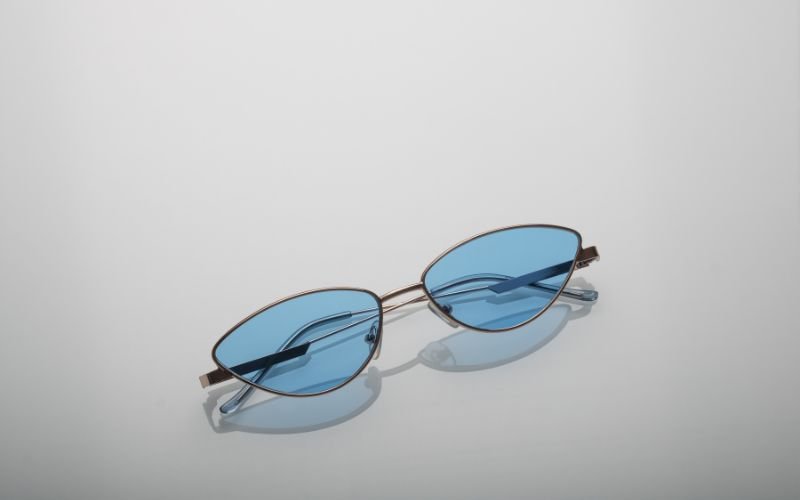
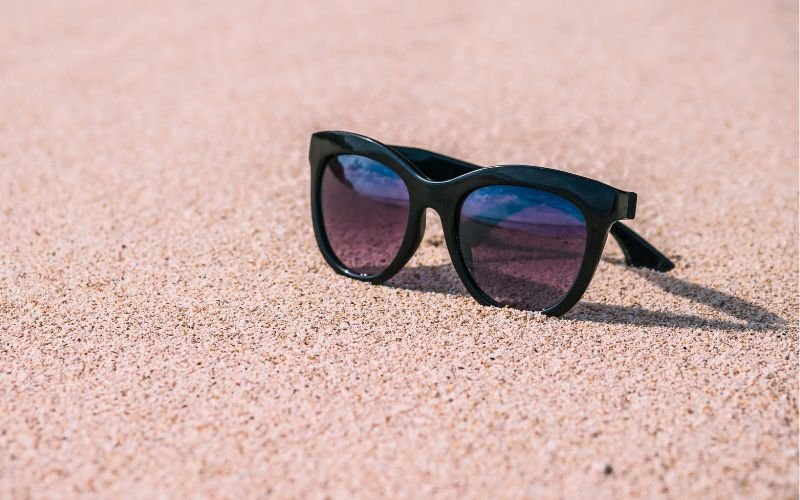
UV light doesn’t only hit you head-on. It comes in from the sides, bounces off pavement, and reflects up from below. A frame that only covers the direct line of sight leaves the skin around your eyes and the edges of your eyes exposed. Wraparound styles and oversized frames close that gap, which is why they’re standard in sports eyewear and increasingly common in everyday fashion frames too. If you’re comparing frame styles, a double-bridge or geometric wraparound shape — like the geometric double bridge sunglasses design — gives you that extra side coverage without looking like sports gear.
3. Lens Material — Polycarbonate
Polycarbonate lenses are lightweight, impact-resistant, and naturally block UV light as part of the material itself, rather than relying entirely on an added coating. This matters for two reasons: durability (they don’t shatter easily, which matters if you’re active outdoors) and consistency (the UV-blocking property doesn’t wear off the way some coatings can over time with scratches and cleaning).
4. Lens Tint — Gray, Green, or Brown
Tint affects comfort and color accuracy, not protection. Gray lenses reduce brightness without shifting colors, which is why they’re the go-to for driving. Brown and amber tints boost contrast, useful for overcast days or uneven terrain. Green splits the difference — good contrast, minimal color distortion. None of these tints block more UV than another; a dark lens with no UV coating is arguably worse than a light lens with proper protection, because your pupils dilate behind dark lenses, letting in more unfiltered UV if the coating isn’t there.
Polarized Lenses and Mirror Coatings: Useful, But Not the Same Thing as UV Protection
This is where most buyers get confused, so it’s worth being direct about it.
Polarized lenses cut glare — the harsh reflected light off water, wet roads, snow, or car hoods. They reduce eye strain and make it easier to see clearly in bright conditions, which is genuinely useful for driving or being near water. But polarization is a separate property from UV protection. A polarized lens with no UV coating blocks glare and nothing else. Always check that a polarized pair is also labeled 100% UV or UV400 — don’t assume one implies the other.
Mirror coatings reflect a portion of incoming light off the lens surface, which lowers overall brightness in intense conditions like high-altitude sun or open water. Again, this is a comfort feature layered on top of whatever UV protection the underlying lens does or doesn’t have. A mirrored coating on a lens with no real UV layer is cosmetic, not protective.
Comparison: What Each Sunglasses Feature Actually Does
| Feature | Blocks UV Rays? | Reduces Glare? | Best For |
| UV400 / 100% UV Coating | Yes — this is the protection itself | No | Everyone, every time you’re outdoors |
| Polarized Lenses | Only if paired with UV coating | Yes | Driving, water, snow, bright pavement |
| Mirror Coating | Only if paired with UV coating | Reduces brightness, not true glare | High-altitude sun, open water |
| Polycarbonate Lens | Yes, inherently | No | Sports, kids, daily durability |
| Dark Tint Alone (no UV rating) | No | Slightly | Nothing — this is the trap to avoid |
| Wraparound/Oversized Frame | Blocks peripheral UV entry | No | Driving, outdoor work, dusty conditions |
How to Actually Check Before You Buy
Most people shop for sunglasses the way they shop for sunscreen with no SPF label — going on feel instead of fact. Here’s a straightforward process that avoids that mistake.
Step 1: Look for the UV rating first, style second. Before you fall in love with a frame shape, confirm the product description or lens etching states “100% UV protection” or “UV400.” If a listing doesn’t mention it at all, treat that as a red flag rather than an oversight.
Step 2: Hold the lens up and check for distortion. Look through the lens at a straight line — a door frame or window edge works well. If the line warps or bends as you move the lens, the optical quality is poor, which causes eye strain even if UV protection is fine.
Step 3: Match frame size to your face and lifestyle. If you’re outdoors a lot — commuting on a bike, working construction, spending weekends outside — go oversized or wraparound. If it’s mostly daily wear and driving, a well-fitted standard frame with full UV coverage is enough.
Step 4: Decide if you need polarization. Drive often, live near water, or deal with glare off roads and pavement regularly? Go polarized. Mostly indoor-to-outdoor daily wear? Standard UV-protected lenses are sufficient and usually more affordable.
Step 5: Check lens material if you’re rough on gear. Polycarbonate is the practical choice for kids, sports, or anyone who tends to drop or knock their sunglasses around — it resists shattering far better than standard plastic or glass lenses.
Real-World Examples: Who Needs What
The daily commuter in Lahore or Karachi. Spending 30–60 minutes a day in direct sun, often stuck in traffic with sun glare off other vehicles’ windshields. A polarized, gray-tinted, UV400 pair with a standard-to-slightly-oversized frame covers this well — glare reduction for driving, full protection for the rest of the day.
The outdoor worker or delivery rider. Hours of continuous sun exposure, often with dust and wind involved. Wraparound frames with polycarbonate lenses are the practical pick here — impact resistance matters as much as UV blocking, and the wraparound shape stops dust and peripheral light both.
The student or casual, everyday wearer. Doesn’t need polarization or heavy-duty materials, just consistent, reliable UV protection in a frame they’ll actually enjoy wearing. This is where style and budget matter most, as long as UV400 is confirmed. Browsing a wide range of UV-protected sunglasses styles makes it easier to find something that fits both the face and the budget without compromising on the protection itself.
Parents buying for kids. Children’s eyes let in more UV radiation than adult eyes because the lens inside a child’s eye is clearer and less able to filter light. Polycarbonate lenses with confirmed UV400 ratings, in a snug, well-fitted frame that won’t slide off during play, are the priority — style is secondary here.
Pro Tips Most Buying Guides Skip
- Cheap doesn’t mean unprotected, and expensive doesn’t guarantee protection. Price correlates with brand and materials, not automatically with UV rating. A budget pair with a genuine UV400 label protects your eyes just as well as a premium pair with the same rating — the premium pair is paying for frame materials, brand, and finish, not extra UV blocking.
- Replace sunglasses when the coating wears off, not just when the frame breaks. Scratched lenses and worn coatings reduce UV effectiveness even if the frame still looks fine.
- Don’t judge protection by how dark the lens looks in-store lighting. Store lighting is dim compared to direct sun, so a lens can look darker or lighter than it actually performs outdoors. Trust the label, not the visual impression indoors.
- Sunglasses matter even on cloudy days. UV rays pass through cloud cover more than people expect. If you’re outside for extended periods, cloudy skies don’t mean you can skip protection.
- Check the fit around your temples. A pair that constantly slides down means you’re unconsciously squinting and adjusting all day, which partly defeats the purpose even if the lenses are properly rated.
Common Mistakes That Undo Good Intentions
Buying sunglasses with the right UV rating is only half the job. A few habits quietly cancel out the protection:
- Wearing them on top of your head more than on your face. Convenient, but it means the hours you actually need protection are the hours you’re not wearing them.
- Assuming kids’ sunglasses are “cute extras” rather than necessary. Given how much more UV young eyes absorb, this is one of the more overlooked gaps in family sun protection.
- Buying based on tint darkness alone. As covered above, this is the single most common and most damaging assumption people make.
- Skipping sunglasses on short trips. Quick errands add up. Cumulative exposure across a week of five-minute exposures isn’t negligible over years.
Frequently Asked Questions
Do polarized sunglasses actually work?
Yes — polarized lenses use a special filter that blocks horizontally scattered light, which is what causes glare off flat, reflective surfaces like roads, water, and car hoods. They noticeably reduce eye strain and improve visual clarity in bright, glare-heavy conditions like driving or being near water.
Do polarized sunglasses protect your eyes from UV rays?
Not on their own. Polarization and UV protection are two separate lens properties. A polarized lens only blocks UV rays if it also has a UV400 or 100% UV protection coating applied — always check for both, since one doesn’t automatically include the other.
Are polarized sunglasses worth it?
For drivers, cyclists, or anyone frequently near water, snow, or bright pavement, yes — the glare reduction genuinely improves comfort and visibility. For mostly indoor-to-outdoor daily wear with minimal glare exposure, standard UV-protected sunglasses without polarization work just as well and are usually cheaper.
What is the difference between polarized and non-polarized sunglasses?
Polarized lenses filter out glare from reflective surfaces using a specialized coating, giving clearer vision in bright, reflective conditions. Non-polarized lenses simply darken your overall view without filtering that specific glare. Both can offer identical UV protection — the difference is purely about glare handling, not sun damage prevention.
Do polarized sunglasses make it hard to see phone or car screens?
Sometimes. Polarized lenses can cause certain LCD screens — car dashboards, some phone screens, ATM displays — to appear dim, distorted, or partially blacked out, because those screens also use polarized filters that can clash with the lens. It’s usually minor and adjusts with head tilt, but worth testing before committing if you rely heavily on dashboard displays.