Sunglasses for Small Faces: The Complete Fit and Style Guide
If you have a small face, sunglasses that look great on everyone else can end up sliding down your nose, resting on your cheeks, or swallowing your features whole. Sunglasses for small faces generally work best with a lens width of 44mm to 50mm, a bridge width of 14mm to 18mm, and a temple length between 125mm and 135mm. Frame shapes that sit wider than they are tall — like petite cat-eyes, rounded frames, and slim rectangles — tend to balance small, narrow features without overwhelming them.
That’s the short answer. The longer answer involves understanding your own measurements, knowing which shapes actually work with your bone structure, and avoiding a few common mistakes that even people who’ve worn sunglasses their whole lives still make.
What Counts as a Small Face, Really?
There’s no single medical definition for a “small face” — it’s mostly about proportion. Most opticians agree that if the distance between your temples measures somewhere between 115mm and 130mm, you’re working with a smaller-than-average face width. You’ll often notice a few things alongside that measurement: a narrower nose bridge, cheekbones that sit closer together, and temples (the arms of your glasses) needing to be shorter to sit comfortably behind your ears without extra length flapping around.
None of this is a flaw to fix — it’s just a sizing category, the same way clothes come in small, medium, and large. The problem is that most mainstream sunglasses are cut for an average or larger face, which is why so many petite-featured people end up with frames that constantly slip or dominate their whole face.
How to Measure Your Face for Sunglasses at Home
You don’t need an optician’s tools for this. A soft measuring tape or even a ruler and a mirror will do.
- Measure your temple-to-temple width. Stand in front of a mirror and measure straight across your face at eye level, from the outer edge of one temple to the other. If you land between 115mm and 130mm, you’re in small-face territory.
- Check your nose bridge. Look at your face side-on, ideally in a photo. If the bridge of your nose sits level with or below your pupils, you’ll want a narrower bridge width, around 14mm to 18mm, so the frame doesn’t slide.
- Measure eye-to-ear distance for temple length. Run the tape from the outer corner of your eye to just above your ear. A shorter distance here — roughly 80mm to 90mm — usually pairs well with a temple arm length of 125mm to 130mm.
- Find your pupillary distance (PD) if you can. This is the space between your pupils, typically 54mm to 74mm in adults. It matters most for prescription sunglasses, since it keeps your line of sight centered in the lens instead of off to one side.
If you already own a pair of sunglasses that fits you well, flip them over. The frame measurements are usually stamped on the inside of the temple arm as three numbers separated by a small square or dash — lens width, bridge width, and temple length. That’s your personal sizing reference for every future purchase.
Ideal Frame Measurements for Small Faces
| Measurement | Recommended Range | Why It Matters |
| Lens width | 44mm–50mm | Keeps the frame proportional to a narrower face without looking childish |
| Bridge width | 14mm–18mm | Prevents slipping on a lower or narrower nose bridge |
| Temple length | 125mm–135mm | Ensures a snug fit behind the ears without extra overhang |
| Overall frame width | 120mm–130mm | Matches the natural width of a smaller face |
| Frame height | Moderate to low | Tall frames can cover too much of the face and make it look smaller |
Staying inside these ranges is the single biggest factor in whether a pair of sunglasses looks intentional on you or looks borrowed from someone else.
Best Sunglasses Shapes for Small Faces
Shape does almost as much work as size. Here’s what actually flatters narrower, more delicate features, and why.
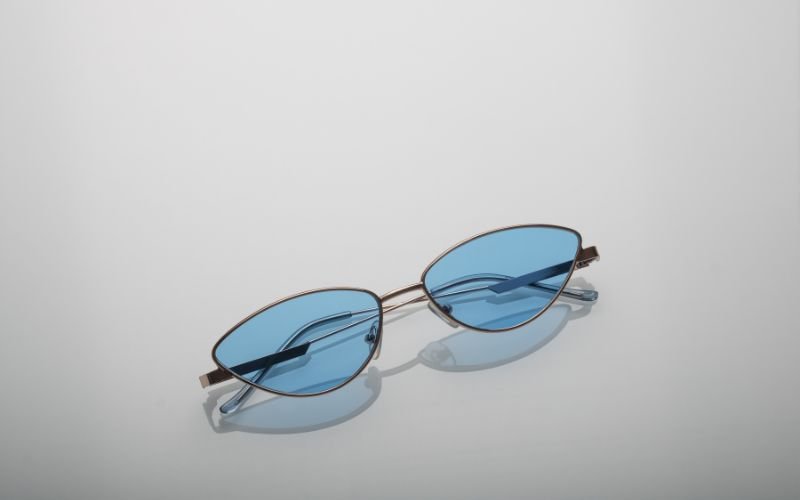
Cat-eye frames are one of the safest bets for a small face. The upswept outer corners add horizontal width right where narrow cheekbones need it, without adding bulk anywhere else. A subtle cat-eye reads as polished rather than costume-y.
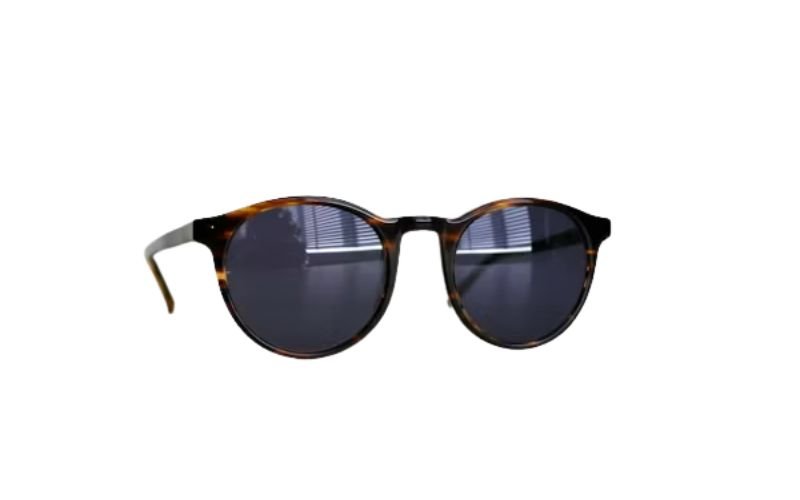
Round and oval frames work with the natural softness of smaller features instead of fighting it. Because the curves don’t extend far past the eyes, round sunglasses give a bit of visual fullness to the face without looking oversized. This is one of the reasons round sunglasses have stayed a wardrobe staple across decades — they’re forgiving on proportion.
Thin wireframes let the face lead instead of the frame. Metal or fine acetate rims sit almost invisibly, which is ideal if you’d rather the sunglasses complement your features than compete with them.
Petite aviators can work beautifully on a small face, but only in a scaled-down version. A standard aviator is often too tall and too wide for narrower features, so look specifically for “small” or “petite” sizing within the aviator category rather than a regular one.
Slim rectangular frames add structure to softer, rounder small faces. Because they’re wider than they are tall, they draw the eye horizontally, which balances features that might otherwise look very compact. Urban Rivaj’s rectangular sunglasses with a refined silhouette follow this exact proportion logic — wide enough to add definition, without the bulk of an oversized frame.
Small square frames offer a bit of an edge. The straight lines contrast nicely with softer, delicate features and draw attention upward toward the eyes and forehead rather than downward. For a more structured, angular option in this category, Urban Rivaj’s geometric double bridge sunglasses offer sharp definition while staying compact enough for narrower faces.
Shapes and Sizes to Avoid
- Oversized frames — even if you love the trend-driven look, anything that extends well past your natural face width tends to swallow smaller features rather than frame them.
- Tall, thick frames — height matters more than people expect. A tall frame can make a compact face look even smaller by comparison.
- Wide bridges on frames that already run large — this combination almost guarantees slipping, especially on a lower nose bridge.
- Chunky acetate in oversized shapes — the weight alone can make the glasses sit unevenly and slide down over the course of a day.
If you love the look of oversized sunglasses and don’t want to give it up entirely, look for “petite oversized” or scaled-down versions within that style — you get the visual drama without the poor fit.
Comparison: Which Sunglasses Shape Fits Which Face Shape
| Face Shape | Best Small-Face Sunglasses Style | Why |
| Oval | Cat-eye, rectangular, geometric | Balanced proportions suit most structured shapes |
| Round | Square, rectangular, angular | Adds definition and contrast to soft curves |
| Heart | Round, oval, cat-eye | Softens a wider forehead and narrower chin |
| Square | Round, oval | Rounds off strong jaw and cheekbone angles |
| Diamond | Cat-eye, oval | Highlights the cheekbones without adding width at the temples |
Small Frame Sunglasses for Different People
Small face sunglasses for women often lean toward cat-eye, petite round, and slim rectangular shapes, especially in lighter metals or fine acetate that won’t overpower delicate bone structure.
Narrow fit sunglasses for men tend to work best in slim rectangular or subtly rounded shapes — masculine enough in styling, but scaled to a narrower temple-to-temple width instead of a standard men’s frame that’s built for an average or wider face.
Sunglasses for kids and petite adults frequently overlap in sizing. A lens width in the 44mm to 47mm range and a shorter temple arm suit both groups, which is why some petite adults end up shopping in junior or teen ranges out of necessity rather than choice — a frustrating workaround that a dedicated small-face collection solves properly.
Compact sunglasses for small heads matter beyond aesthetics too. A frame that’s genuinely too wide won’t just look off — it will constantly need pushing back up, which gets old fast during travel, driving, or a full day outdoors.
Common Mistakes When Buying Sunglasses for a Small Face
- Buying based on trend photos alone. A shape that looks incredible on a model with average or wider face proportions can look completely different on you. Always cross-check the actual frame measurements, not just the photo.
- Ignoring bridge width. People obsess over lens width and forget the bridge is often the real reason a pair slides. A bridge that’s even 3mm to 4mm too wide can cause constant slipping.
- Assuming “one size fits all” applies to sunglasses. It doesn’t. Frame sizing varies as much as clothing sizing does, sometimes more, because there’s no standardized labeling across brands.
- Going oversized to “make a statement.” It can work in small doses, but oversized frames are the single most common fit mistake for smaller faces.
- Skipping UV protection to save money. Fit matters, but so does function. Sun exposure adds up over the years, and prolonged unprotected exposure is linked to long-term eye damage, which is why eye care organizations consistently recommend sunglasses that block both UVA and UVB rays rather than tinted lenses with no real UV filtering.
Why UV Protection Matters as Much as Fit
A well-fitted pair of sunglasses that offers no real UV protection is only solving half the problem. Look for lenses labeled UV400, which block both UVA and UVB rays almost completely. This becomes especially relevant in a country like Pakistan, where UV index levels run high for a large part of the year, particularly between April and September. Polarized lenses add another layer of comfort on top of UV protection — they cut glare from reflective surfaces like roads, water, and glass, which matters a lot if you’re driving regularly or spending time outdoors.
Pairing the right fit with genuine UV400 protection is what separates sunglasses that just look good from sunglasses that actually do their job.
Shopping Tips for Small Face Sunglasses
Before you browse Urban Rivaj’s sunglasses collection or any other store, keep these points in mind:
- Always check the three-number frame measurement (lens width, bridge width, temple length) before buying, especially when shopping online where you can’t try before you buy.
- Prioritize adjustable nose pads if you have a particularly low or narrow bridge — they let you fine-tune the fit after purchase.
- Lightweight materials like thin metal alloys or slim acetate reduce the chance of the frame sliding from its own weight.
- If a pair sits close to the edge of the recommended range (say, 50mm to 52mm lens width), try it on or check reviews for fit feedback before committing.
- Don’t ignore temple length. A frame with the perfect lens and bridge width can still feel loose or tight if the arms are the wrong length for your ears.
Frequently Asked Questions
What type of sunglasses suit a small face?
Cat-eye, round, oval, thin wireframes, and slim rectangular shapes tend to suit small faces best. These styles either stay proportional to narrower features or add balance without overwhelming them, unlike oversized or tall frames.
What size sunglasses fit a small face?
Look for a lens width between 44mm and 50mm, a bridge width of 14mm to 18mm, and a temple length around 125mm to 135mm. These ranges keep the frame proportional to a face measuring roughly 115mm to 130mm across.
Which sunglasses fit which face shape?
Oval faces suit most balanced shapes like cat-eye and rectangular. Round faces do well with angular styles like square or rectangular frames. Heart-shaped faces suit round or oval frames, while square faces are softened by round or oval shapes.
Are 52mm sunglasses small?
52mm sits right at the upper edge of what’s considered small-to-medium. It can work for a small face with slightly wider proportions, but most people with a genuinely narrow face will find 44mm to 50mm more secure and better balanced.
How do you select the right sunglasses size?
Measure your temple-to-temple width, nose bridge position, and eye-to-ear distance, then match those numbers against the frame’s lens width, bridge width, and temple length. If you have a well-fitting pair already, use its printed measurements as a reference for future purchases.